
Repair & restoration
Fix the damaged part. Keep the rest of the floor.
Water damage, a strip of missing boards where a wall used to be, a section the dog got to. Almost none of it is a reason to tear out a whole floor.
What we repair
Water damage
A supply line lets go under a sink, a slab leak turns up under a hallway, a door gets left open through a monsoon storm. Wood absorbs the water and swells — boards cup, edges lift, and in the worst cases the floor buckles away from the slab. Long planks are especially prone to warping, because there's more board to move.
The first job is always the same: stop the water and dry the floor properly. Wood that has swollen will often shrink back close to flat as it dries, and how much it recovers determines how much actually has to be replaced. Sanding a floor while it's still wet just gives you a thinner wet floor. Once it's dry, we know what we're dealing with.
Board replacement and lacing-in
When boards do have to go, the craft is in making the replacement invisible. New boards are woven into the existing run — staggered, not butted in a straight line — so the eye reads one continuous floor instead of a rectangle of patch.
The matching is the harder half. Species, grade, plank width, cut and colour all have to line up. One client came home from a business trip to find a wall between the dining and sitting rooms had been removed, leaving a nine-foot void through the middle of the floor. We took sample boards from the existing floor, mailed them to the mill, got matched samples back, and laid them down in the room to confirm the match before anything was ordered.
Scratches, dents and pet damage
There's a line worth knowing about, because it decides what you pay. Damage that hasn't reached bare wood is a finish problem — often just a screen-and-recoat. Damage that's gone into the wood, or boards stained by accidents, needs replacing. We'll tell you which side of that line your floor sits on.
Colour and finish matching
New wood almost never matches old wood straight out of the box, because the old floor has had years of light and air working on it. Two routes: stain the new boards to match, or replace first and then sand and refinish the whole area so old and new end up sharing exactly one colour. The second costs more and looks better, and for a room that's fully visible from the rest of the house it's usually the right call.
Insurance work
If a water event is going through your insurer, we'll document what we find — photos, moisture readings, the scope of what has to be replaced and why. Adjusters want the boundary between "dried out fine" and "has to go" drawn clearly, and that's easier to do while the floor is still open.
How a repair runs
-
Find the cause
There's no point replacing boards over a slab that's still wet or a fitting that's still weeping. We look for where the moisture came from before we quote the repair.
-
Dry, then measure the damage
Air movement and time. Once the floor is genuinely dry we can see what recovered and what didn't, and the replacement list gets shorter than it looked on day one.
-
Match the material
Sample boards from your own floor, matched to species, grade, width and cut. Samples come back to the house and go on the floor before anything is ordered.
-
Lace in and blend
New boards woven into the existing run, then stained and finished — either spot-matched or by refinishing the whole area, depending on how visible the repair is.
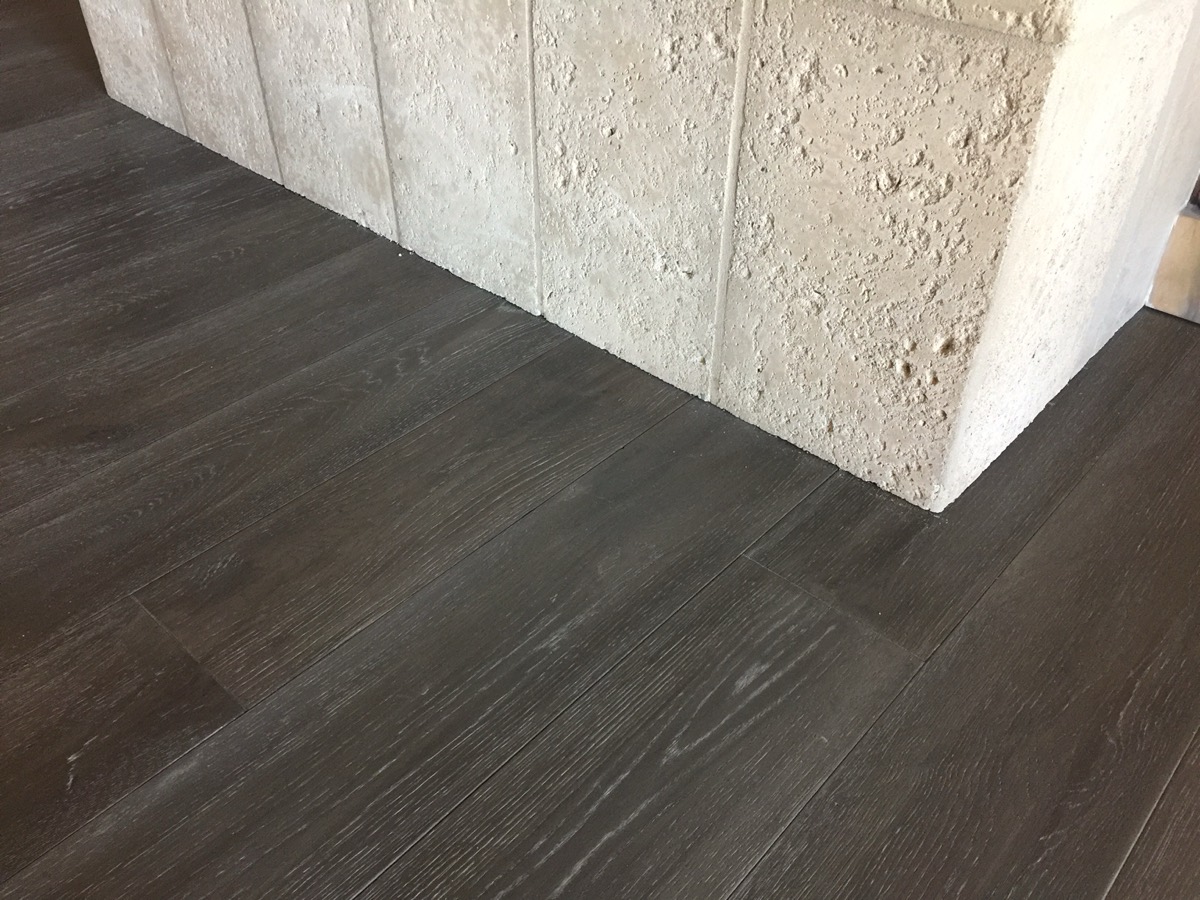
A cupped or water-damaged board before removal.
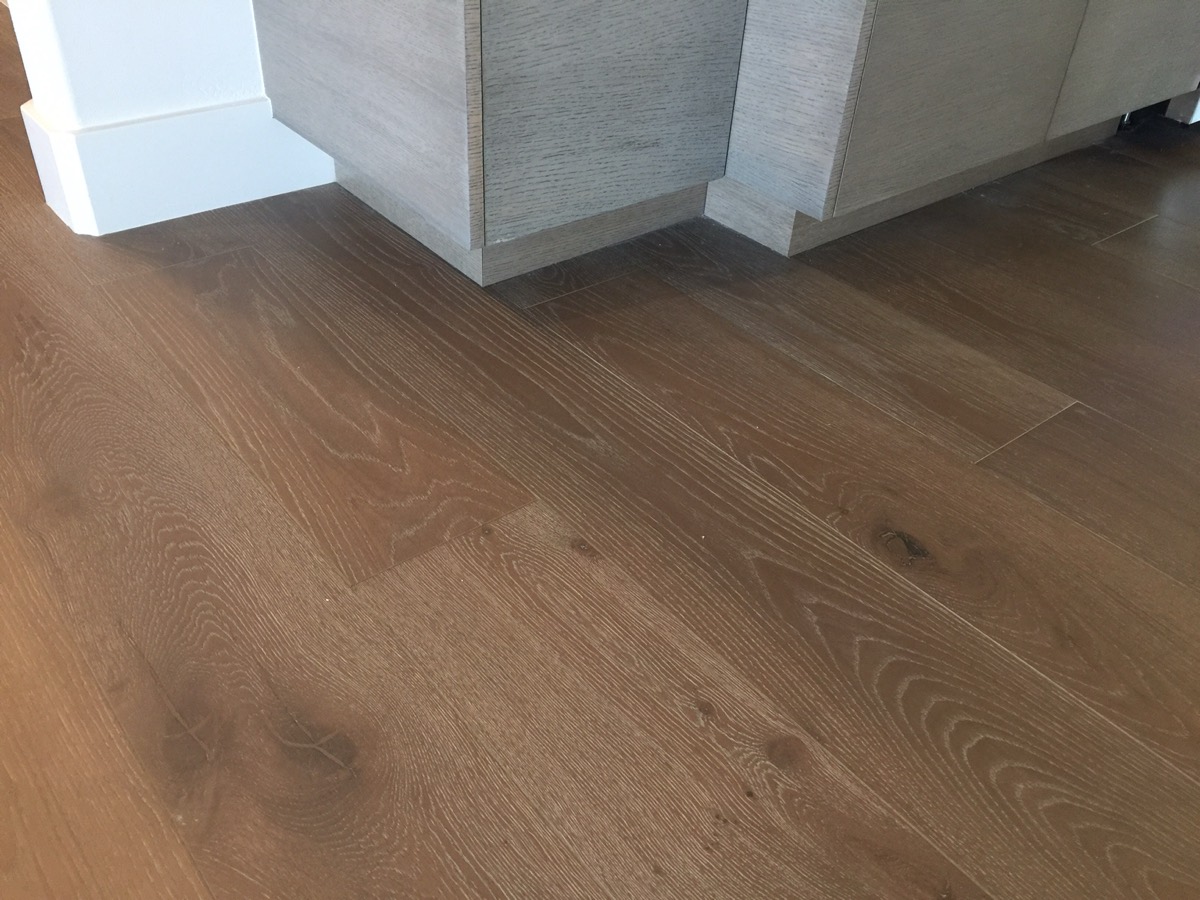
Lacing-in mid-repair: new boards woven into the old run, seam still visible.
The same area finished, where the repair has disappeared.
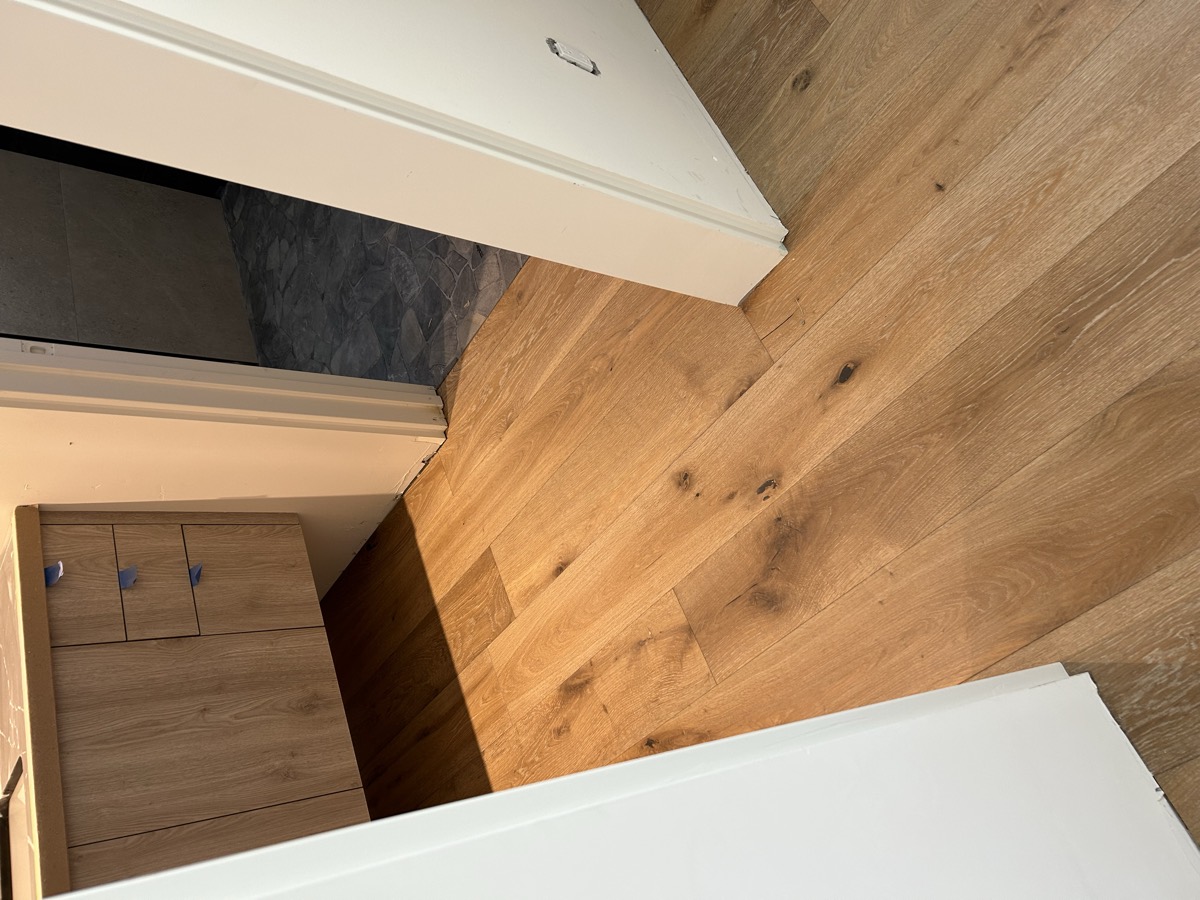
Sample boards from a client floor laid next to mill-matched replacements.
Maintenance, so the repair is the last one
Most repair calls in the Valley trace back to two things: water that sat too long, and desert grit that was never swept up. Fine dust behaves like sandpaper under foot traffic — it wears through finish, exposes raw wood, and once wood is exposed it moves faster with humidity and damages faster.
Regular sweeping or vacuuming does more for a wood floor than any product. For sticky spills, a damp cloth followed by a dry one. Avoid the wet mop, oil soaps, paste wax and acrylic dressings on a polyurethane floor. And avoid diluted vinegar or ammonia entirely — both acid-etch polyurethane and leave it permanently dull.
Water damage? Call, don't wait.
The sooner a wet floor starts drying, the fewer boards come out. Call or text and we'll talk you through the first hours.
Call (602) 535-1214- Or send detailsDescribe the damage →
- Emailrafal@olympichardwood.com
Repair questions we get asked
My floor got wet. What should I do first?
Stop the water, then get the air moving — fans and dehumidification, not heat. Don't pull boards up yourself and don't sand a wet floor; wood that has swollen will often shrink back closer to flat once it dries, and how much it recovers decides how much has to be replaced. Call us while it's drying rather than after, because the drying is part of the repair.
Can you match boards to a floor that's no longer made?
Usually, yes. We take sample boards out of your existing floor and work from them — species, grade, width, cut and colour. On one job we mailed the homeowner's original boards to the mill, got matched samples back, and laid them on the floor to check before ordering. If an exact match genuinely doesn't exist, the honest options are a deliberate transition, or sanding and refinishing the whole area so old and new share one colour.
Can you fix a hole left where a wall was removed?
Yes — that's one of the most common calls we get. Opening up a dining room or kitchen leaves a strip of missing floor, sometimes several feet long. The repair is called lacing-in: new boards are woven into the existing run so the seam doesn't read as a patch, then the area is blended by refinishing.
What about pet scratches and dents?
Surface scratches that haven't gone through to bare wood are a refinishing question, not a repair one — often just a screen-and-recoat. Deep gouges, chewed edges and boards stained by accidents need replacing. We'll tell you which category your floor is in, because the price difference between the two is large.
Do you repair engineered floors, or only solid?
Both. Engineered boards are replaced the same way solid ones are; the constraint is whether the remaining floor can be sanded to blend the repair, which depends on the thickness of the wear layer. For a thin-veneer floor, we plan the repair so it doesn't need sanding at all.
Is it worth repairing, or should I just replace the floor?
Repair is almost always cheaper, and on an older or unusual floor it's often the only way to keep something you can't buy again — a custom border, a rare species, a floor that matches the rest of the house. We'll tell you when a floor is genuinely past saving. We'd rather do that than sell you a repair that fails in a year.
Send a photo. We'll tell you what it needs.
Most repair questions can be answered from two pictures and a sentence about what happened.