
Refinishing & sanding
The floor you have is probably worth saving.
Sanding and refinishing brings an old floor back for a fraction of what replacing it costs. Sometimes it doesn't even need that — and we'll tell you when a recoat is all you're paying for.
First question: does it need sanding at all?
A tired-looking floor isn't always a worn-out floor. Very often the wood is fine and only the finish is dull — scuffed by years of fine desert grit acting like sandpaper underfoot. In that case, taking the floor down to bare wood is expensive, unnecessary, and spends a sanding you can never get back.
So we look at the floor before we quote it, and we come back with one of three answers.
| What we do | When it's the right call | What it involves |
|---|---|---|
| Clean and polish | The finish is intact, the floor is just dirty or hazed. | The cheapest honest answer. Sometimes a floor genuinely only needs this, and we'll say so. |
| Screen & recoat (buff and recoat) |
Finish is worn and scratched, but the scratches haven't reached bare wood and you're happy with the colour. | We abrade the existing finish, then lay a fresh coat over it. Usually a room in a day. No stain change, no wood removed. |
| Full sand & finish | Deep scratches into the wood, grey or water-stained boards, pet damage, or you want a different colour entirely. | The floor comes back to bare wood, gets stained if you want, then rebuilt with a new finish system. |
How a full sand-and-finish actually runs
-
Protect the house first
Drapes and artwork covered, doors taken off, HVAC registers sealed so nothing travels through the ducts, shoe moulding lifted, and the floor swept clean of loose debris. This step is why some refinishing jobs leave a house liveable and others leave a mess.
-
Sand, on a dust-containment system
Big machines for open floor, edgers along the walls, hand and detail sanders in corners and under cabinet toe-kicks. Our sanders vent into containment rather than into your rooms. It isn't magic and it isn't literally zero dust — but clients keep writing that they expected far worse.
-
Work up through the grits
Vacuum, inspect, sand again finer, repeat. Each pass removes the scratch pattern the previous one left. Rushing the grit sequence is the classic way to end up with a floor that looks fine until the finish goes on and every swirl appears.
-
Screen and wipe down
A final pass with a 120-grit screen smooths out the last fine scratches, then the whole room is cleaned and the floor wiped with mineral spirits. That wipe also shows us exactly how the bare wood will take stain.
-
Stain, then build the finish
Test patches on your own floor, in your own light, before anything is committed. Then coats go on with proper cure time between them — and we tell you the real dates for walking on it, putting furniture back, and laying rugs down.
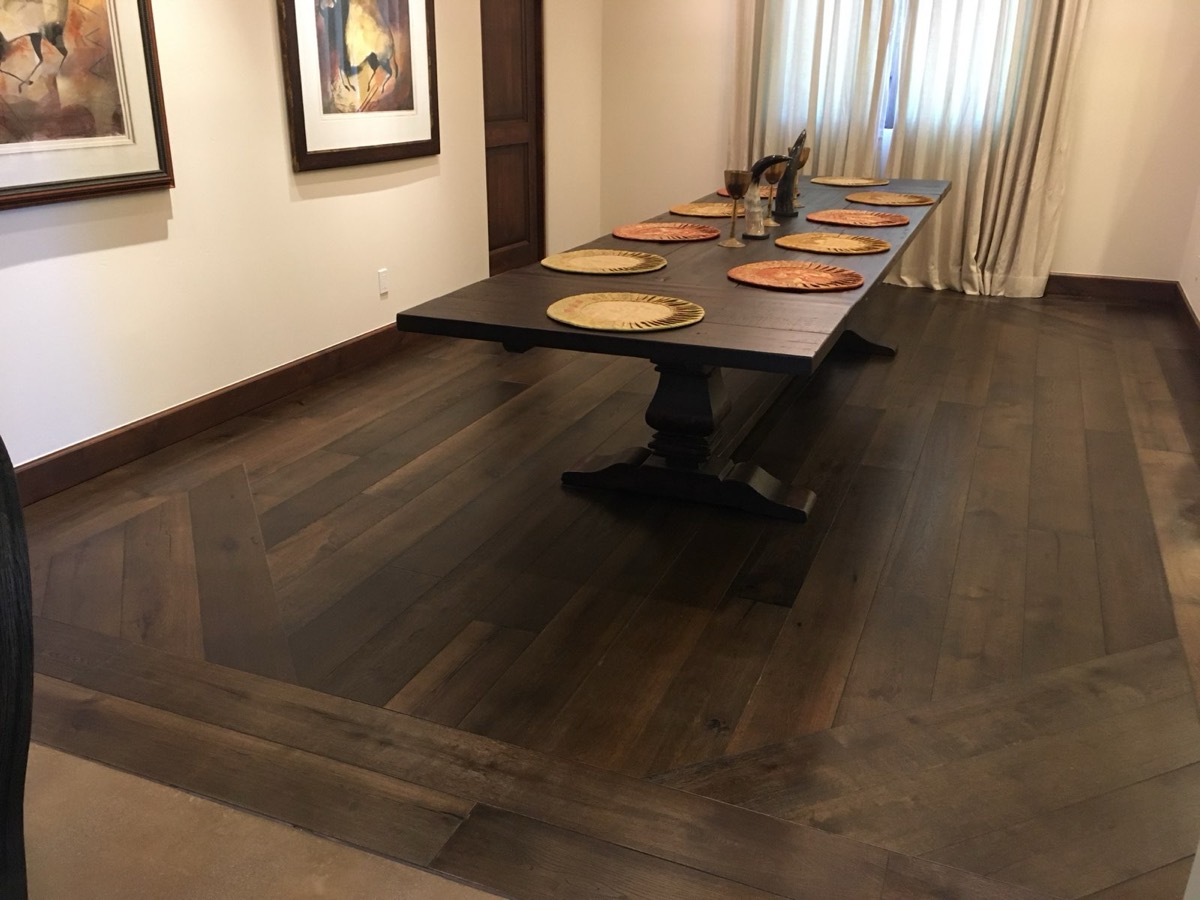
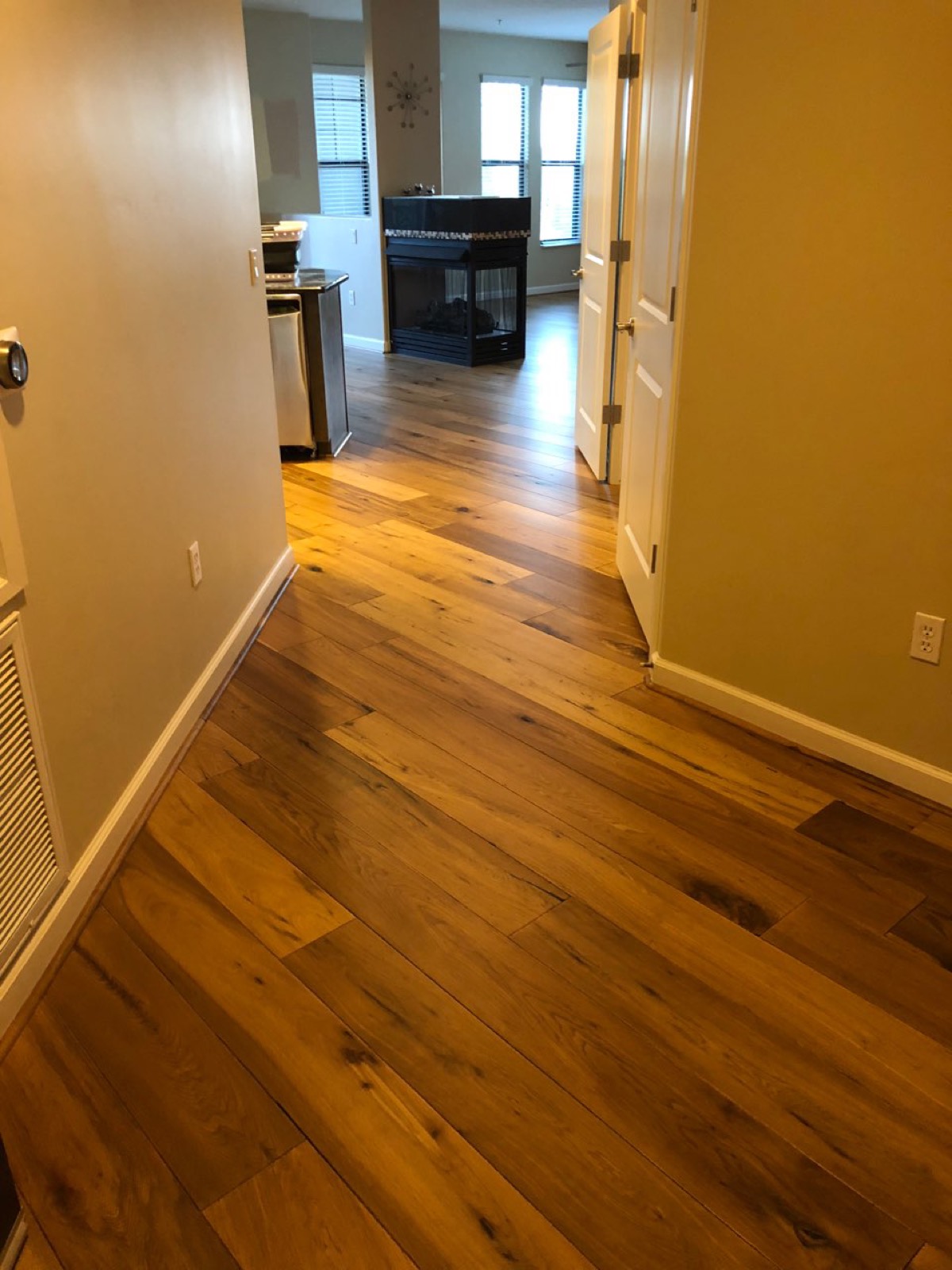
A big sander mid-pass with the dust containment hose visible - this is what sells the dustless claim.
Before and after of the same floor from the same spot. Worth staging on the next refinish job.
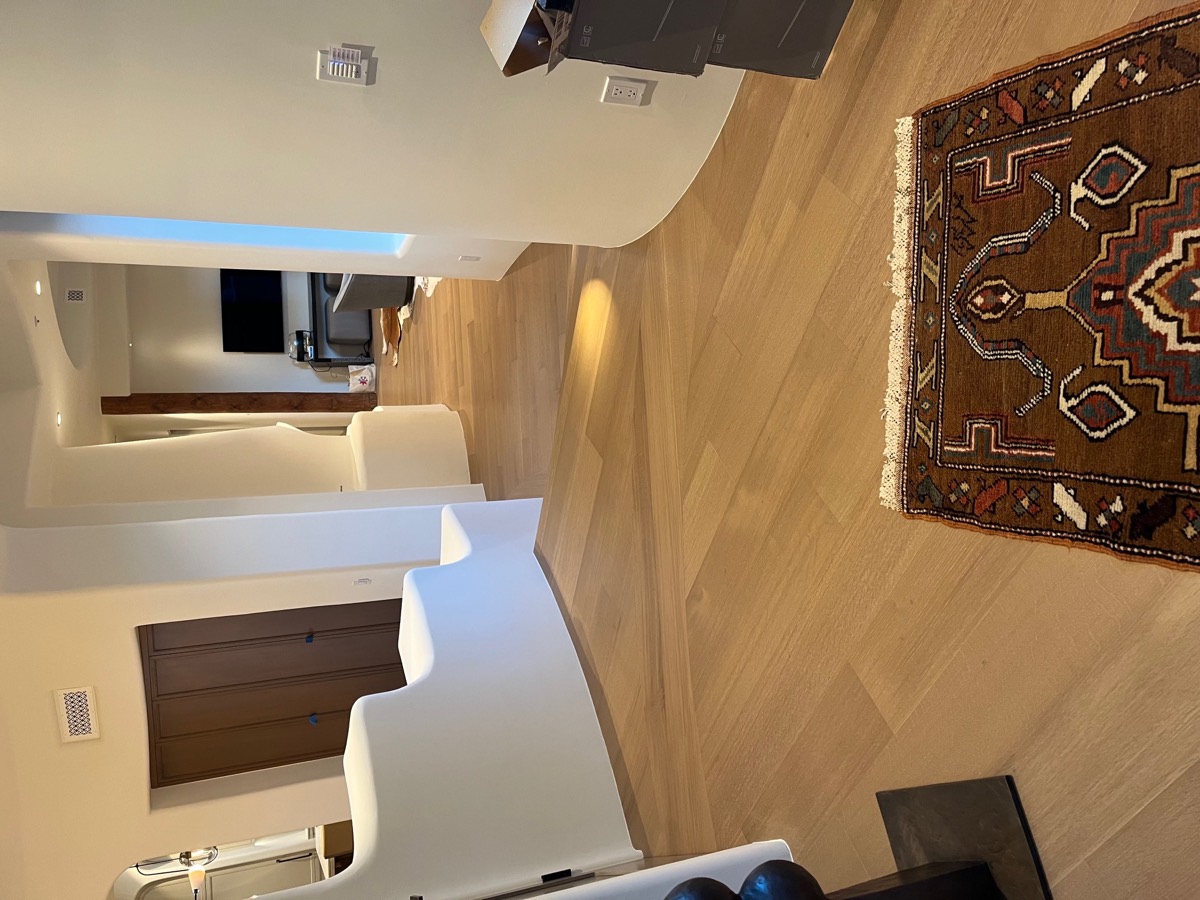
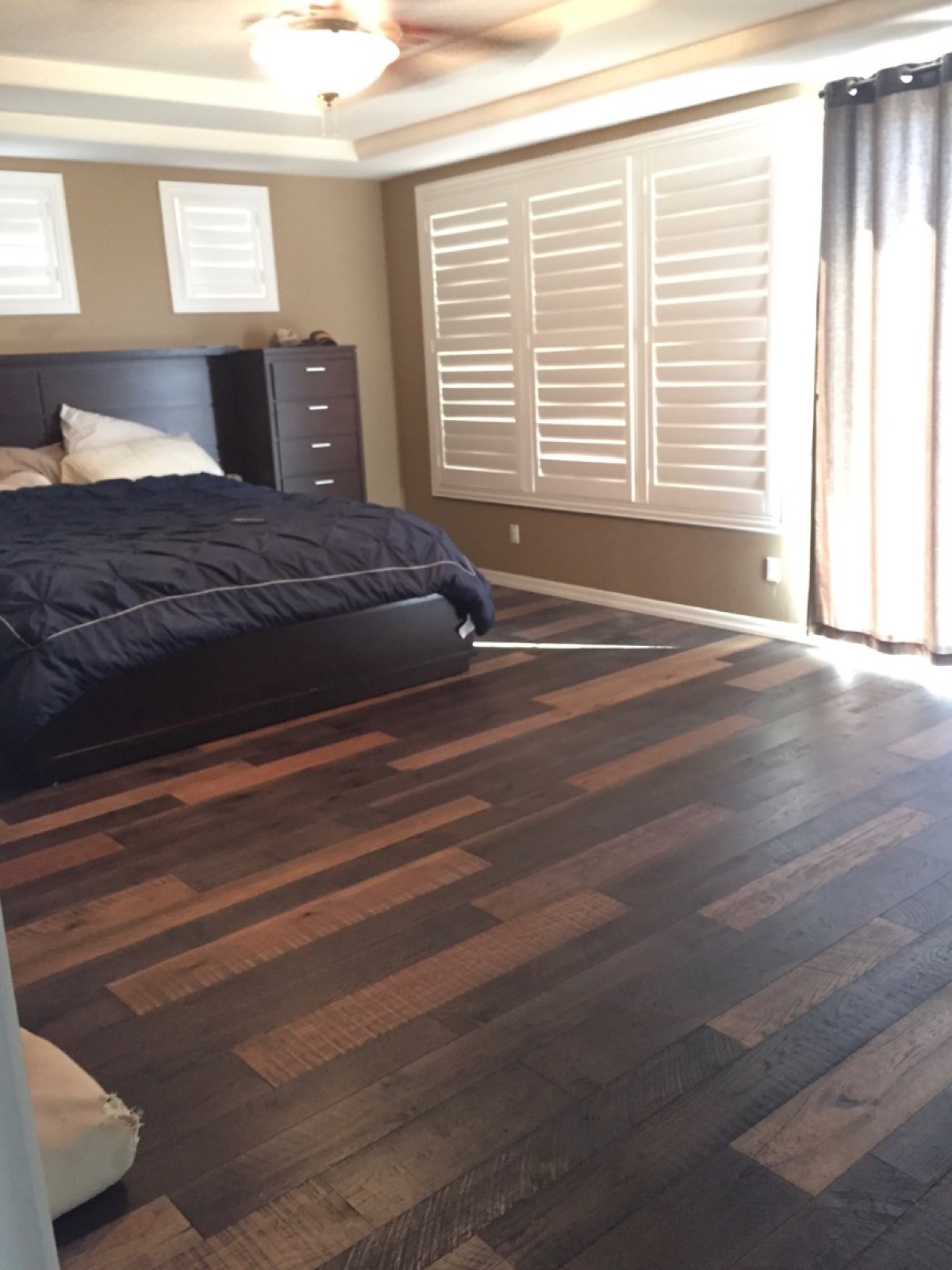
Stain test patches laid out on a bare sanded floor.
Detail sander working a corner or under a cabinet toe-kick.
Choosing the finish
The finish decides how the floor looks, how it wears, and how you'll clean it for the next decade. It matters more than most people expect.
Polyurethane — the default, for good reason
It's the one finish that works almost anywhere. Water-based polyurethane goes over water-based stain, stays clearer, and is walkable soonest. Oil-modified goes over oil-based stain, ambers slightly with age into a warmer tone, and takes longer to cure. Moisture-cured is the toughest of the three and the most demanding to apply.
Sheen: lower than you think
Gloss is measured as a percentage of theoretical mirror shine. Above roughly 50% you get a sleek, formal, dramatic floor — and every scuff, scratch and speck of dust announces itself. Around 15%, low lustre, looks like an expensive European oil-rubbed finish and quietly hides marks. In a Phoenix house with dogs, kids and hard light coming through the windows, low lustre is usually the floor you'll still like in year five.
Factory finishes we can't reproduce on site
Some prefinished floors carry an aluminium-oxide coating cured under as many as seven passes of UV light in a factory. Aluminium oxide sits at 9 on the Mohs hardness scale — the same mineral family as sapphire — and it's water-insoluble, so it's exceptionally hard-wearing. Site-applied polyurethane gets two or three air-dried coats and can't match that hardness, though it can match almost any look. Worth knowing before you sand a prefinished floor: you'll be trading a factory finish for a site finish.
Wax gives a look nothing else quite matches, is genuinely demanding day to day, and is unusually easy to spot-repair. Acrylic-impregnated boards are a different animal again — the acrylic is forced into the wood itself, making the plank far more crush-resistant, which is why it turns up in commercial spaces. More on all of these on the floors and finishes page.
What refinishing can't fix
Boards that have cupped or buckled from a water event need the moisture source solved and the damaged boards replaced — sanding a wet floor flat just leaves you with a thinner wet floor. That's repair work, and it comes before any refinishing.
Refinishing in a desert climate
Two local factors change the calculus. Fine dust is abrasive and constant; it wears finish faster here than in most of the country, which is an argument for recoating on a schedule rather than waiting for the floor to look bad. Hard light fades pigment and ambers resin, so areas under rugs and furniture stay darker than the traffic lanes around them. A refinish evens all of that out — and choosing a finish with UV resistance in mind keeps it even for longer.
We've brought back everything from a custom-stained Brazilian cherry floor in Phoenix to a whole-house restoration in Arcadia where wear was uneven, long planks had warped near a water source, and a pantry had collected years of spills and dings. Both floors stayed; only the surface changed.
Not sure which one you need?
Send a photo of the worst-looking spot. We'll tell you whether it's a recoat, a full sand, or a repair — before anyone visits.
Ask about your floor- Call or text(602) 535-1214
- Emailrafal@olympichardwood.com
Refinishing questions we get asked
How much dust does refinishing actually make?
Far less than the horror stories, because our sanders run on a dust-containment system rather than venting into the room. We still mask doorways, cover HVAC returns, take doors off and protect drapes and artwork before anything switches on. One client put it plainly in a review: they expected some dust, and there was very little.
Can engineered hardwood be sanded and refinished?
Sometimes. It depends entirely on the wear layer — the real wood on top. A 3 mm or thicker sawn wear layer, which is what better engineered floors use, can normally take one full sand or a couple of light ones. A thin rotary-peeled veneer cannot, and sanding it will go straight through. We measure before we quote, and if the answer is no, we say so and talk about a recoat or replacement instead.
Does my floor need a full sand, or just a recoat?
That's the first thing we check, and it's often the cheaper answer. If the finish is worn but the wood underneath is untouched, a screen-and-recoat or buff-and-recoat abrades the existing finish and lays a fresh coat over it — one day of work, no stain change, no wood removed. A full sand-and-finish is for floors with deep scratches, grey or water-stained boards, or a colour you want to change.
How many times can a hardwood floor be refinished?
Every sanding removes a little wood, so the count is finite. A solid 3/4-inch floor can typically be sanded several times across its life. Engineered floors are limited by the wear layer. The practical rule: sand only when the floor actually needs it, and recoat in between to stretch the years.
Can I change the colour of my floors?
Yes — that's one of the main reasons people refinish. Once the floor is sanded back to bare wood, the stain is your choice, and so is the sheen. We put test patches down on your own floor in your own light before committing, because the same stain reads differently on red oak, white oak and Brazilian cherry.
How long before we can walk on it and move furniture back?
It depends on the finish system. Water-based polyurethane is walkable soonest; oil-modified takes longer and carries more smell while it cures. Either way, furniture and rugs go back later than shoes do — putting a rug down on a finish that's still curing is the fastest way to ruin new work. We give you the actual dates for your finish before we start.
What's the best sheen for a Phoenix home?
Lower sheens, usually. A gloss above about 50 percent looks dramatic and formal, but every scuff, footprint and speck of desert dust shows on it. Around 15 percent — low lustre — reads like an expensive European oil-rubbed floor and hides marks, which is why it's the popular choice in homes with kids, dogs and a lot of natural light.
Send us a photo of the worst board.
It's usually enough for us to tell you whether you're looking at a recoat, a full sand, or a repair — and roughly what that means.