
Wide plank
Half the seams. Twice the calm.
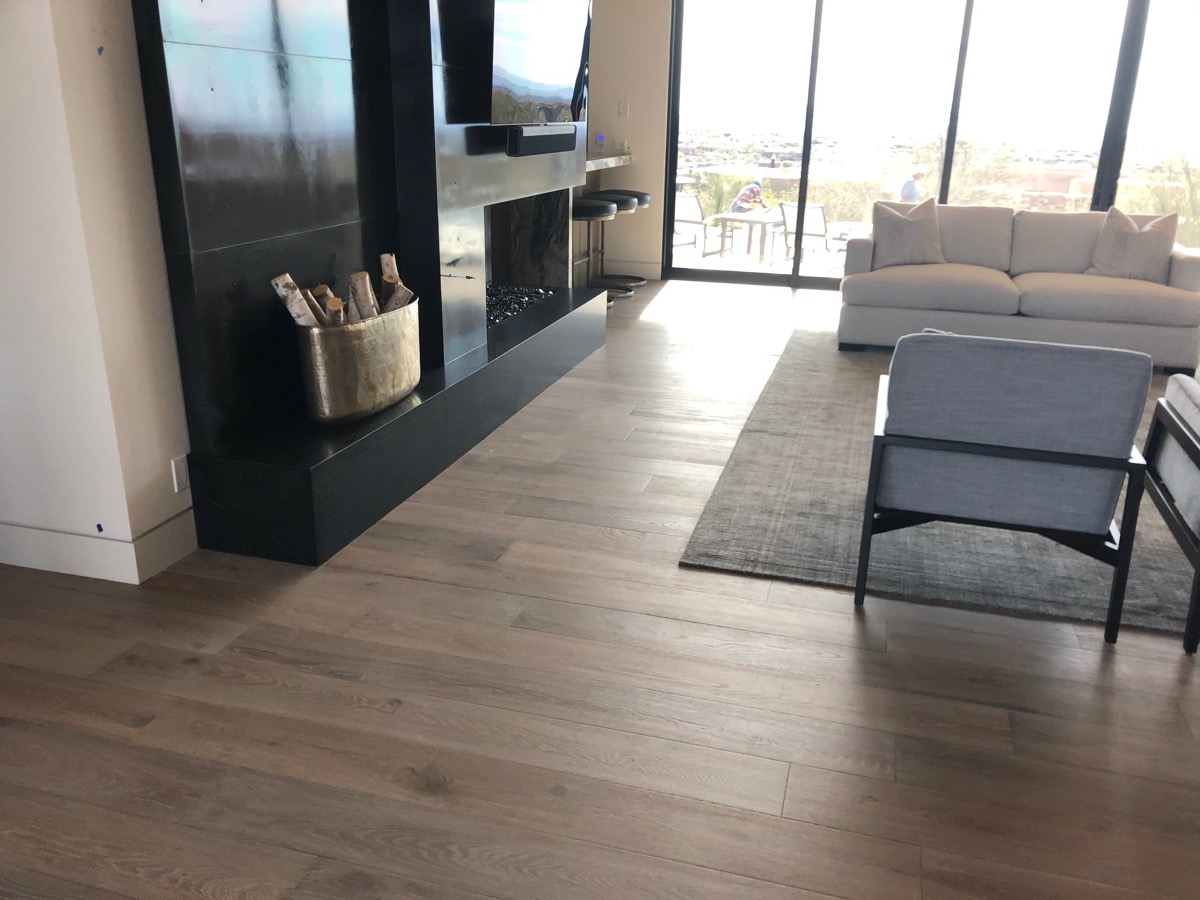
Board width changes a room more than colour does, and almost nobody expects that. Fewer lines across the floor, longer sightlines, a surface that reads as one thing instead of many.
What width actually does to a room
Put a 3¼-inch strip floor and a 7½-inch plank floor side by side in the same room and the difference isn't subtle. The strip floor draws a line every three inches; your eye stops at each one. The wide floor draws one every seven and a half, so the eye keeps travelling. The room reads longer, calmer and larger — and the floor stops competing with everything else in it.
It's the reason wide plank has taken over the top end of residential flooring, and the reason it works so well in the open-plan Valley homes that run kitchen into dining into living room without a wall in between. One continuous surface across all of it holds the space together.
Why it has to be engineered here
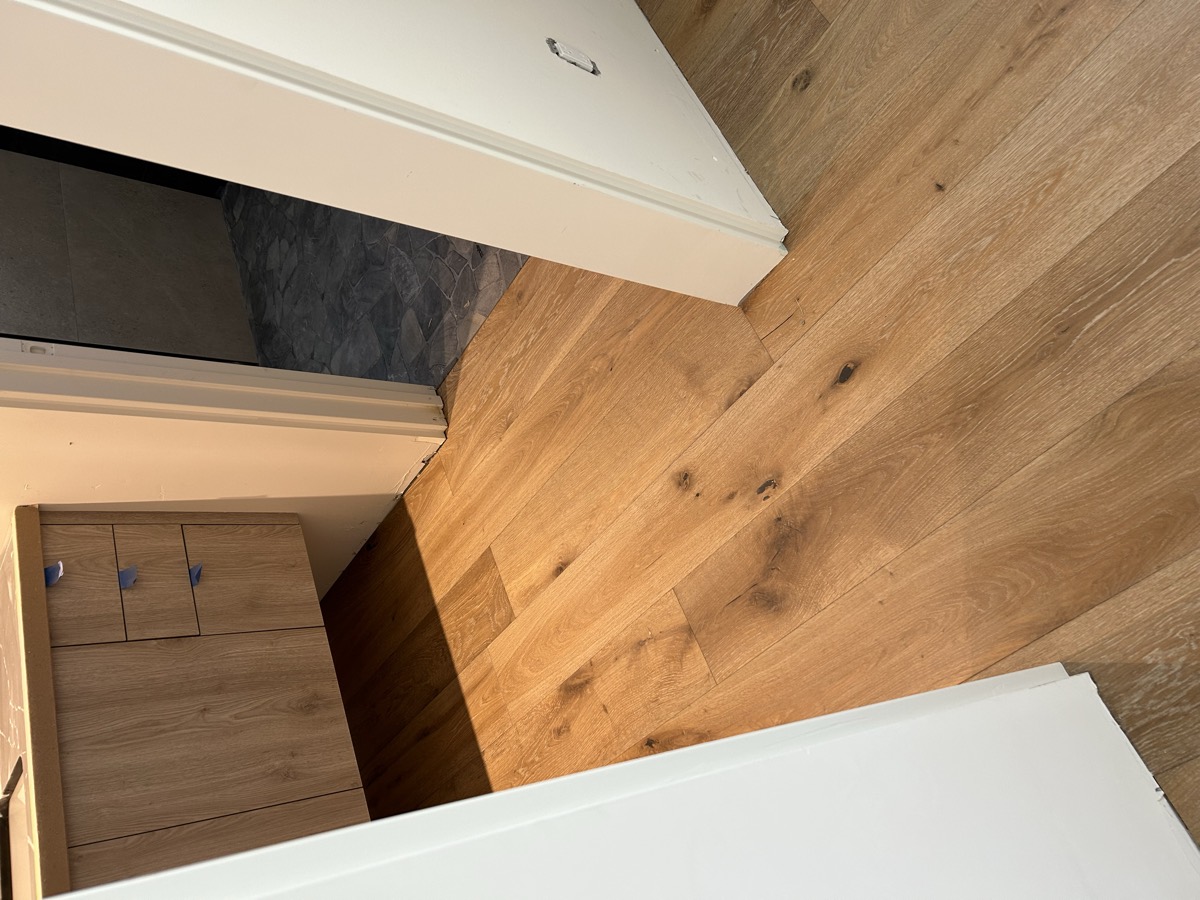
Wood moves across its width, not along its length. That's fine on a 3-inch board; on a 7½-inch board the same percentage of movement is more than twice the distance. In a Phoenix home — concrete slab, air conditioning running most of the year, indoor humidity dropping into single digits — a wide solid board would spend its life opening and closing joints.
Engineered construction solves it. Three to five plies stacked cross-grained cancel most of that seasonal movement out, which is why nearly all wide plank on the market is built this way. The surface is still real sawn hardwood; the width is only possible because of what's underneath it.
Wide plank magnifies the subfloor
This is the honest trade-off. A wide board bridges more slab, so it telegraphs every dip and high spot the strip floor next door would have hidden. Get the slab inside the flatness tolerance and give the material real acclimation time and a wide floor is as stable as any other. Skip either and it shows immediately — hollow spots, movement underfoot, gaps. It's why we prepare our own slabs.
Choosing a width
| Width | How it reads |
|---|---|
| Under 5″ | Strip flooring. Traditional, busier, more forgiving of an imperfect subfloor. Right for period homes and small chopped-up rooms. |
| 5–6″ | The gentle entry to wide plank. Noticeably calmer than strip without dominating a modest room. |
| 7–8″ | Where most of our work sits, and where 7½″ French oak lands. The width that changes how a great room feels. |
| 9″ and up | A statement, and a commitment. Spectacular in a large open room with a properly prepared slab; too much for a hallway. |
Length matters too, and nobody mentions it
Width kills the side seams; length kills the end joints. A floor built from long boards has far fewer butt joints scattered across it, and that's a large part of why a high-end floor looks expensive in photographs without you being able to say why. European milling — the kind that produces French oak — cuts for both.
Pairing width with texture and colour
Wide boards show more of each individual plank, which means grain, knots and colour variation all get more visible. That cuts both ways. A character-grade board becomes genuinely beautiful at width; a busy, high-contrast species can become overwhelming. Wire-brushed textures work particularly well because the raised grain gives all that surface something to do.
The rest of the texture and finish decisions are on the floors and finishes page.
Width can't be judged from a chip
Sample squares are the same size whatever the board is. Come and stand on full-length boards — it's a five-minute visit that settles the question.
Visit the showroom- Walk-insMon–Fri 9–3, no appointment
- Call or text(602) 535-1214
Wide plank questions
What counts as wide plank?
There's no legal definition, but the working line is around 5 inches. Below that you're in strip-floor territory. Most of what we sell as wide plank sits between 6 and 8 inches, with 7½ inches being the sweet spot for a typical Phoenix room — wide enough to change how the space reads, not so wide that it overwhelms a smaller room.
Does wide plank work in a small room?
Often better than people expect. The instinct is that big boards shrink a small room, but the opposite usually happens: fewer seam lines means fewer visual interruptions, and the floor reads as one continuous surface instead of a striped one. Where it does go wrong is in a room chopped up by lots of doorways and angles, because you end up cutting the width off most of the boards anyway.
Can wide plank go over a concrete slab?
Yes — as engineered construction, which is how nearly all wide plank is built. A wide solid board on a slab would move too much in Arizona's dry indoor air and open joints. The cross-grained engineered core is what makes the width possible here at all.
Do wide boards gap or cup more?
They can, and that's exactly why preparation matters more with wide plank than with anything else. Wide boards magnify whatever is underneath them: an uneven slab shows as movement, and skipped acclimation shows as gaps. Done properly — flat slab, verified moisture, real acclimation time — a wide engineered floor is as stable as a narrow one.
Is wide plank more expensive to install?
Usually a little, because the subfloor work has to be better and there's less margin for error. The material itself is also typically priced above a standard strip floor. What you're buying with both is a floor with half the seams, which is the whole point.
What widths and lengths do you carry?
The core of our range is 7½-inch French oak, with wider and narrower options in the showroom and long board lengths that reduce end joints as well as side seams. Come and see full-length boards rather than 6-inch sample chips — width is impossible to judge from a chip.
Come see the width in person.
Five minutes standing on a 7½-inch board tells you more than an afternoon of photographs.